
A specialist's comparison from Dr. AQR Jumeirah, Dubai
Quick Answer
Traditional braces generally offer the most control for complex bite and jaw issues, while clear aligners suit mild-to-moderate cases where discretion and removability matter most. The right choice depends on your specific case — a specialist assessment is the fastest way to know which fits you.
The Basics
Traditional Braces
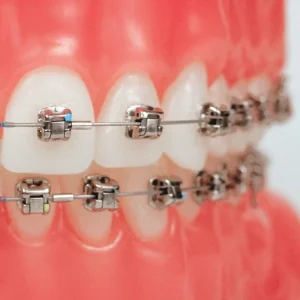
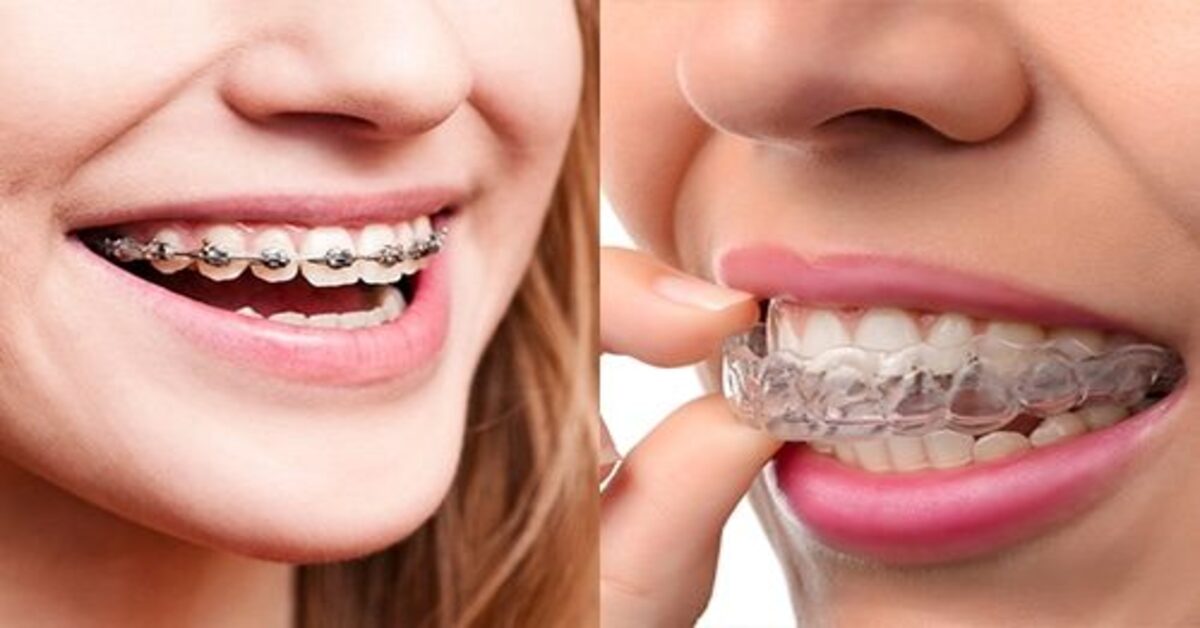
Metal or ceramic brackets bonded to the teeth, connected by wires that are periodically adjusted, applying consistent pressure to move teeth into precise positions.
Clear Aligners
Custom-made, removable plastic trays that gradually shift teeth into place—nearly invisible and removable for meals and brushing.
Which Is More Effective for Your Case?
Braces excel at treating:
- Severe crowding or spacing
- Misaligned bites (overbites, underbites, crossbites)
- Rotated or vertically misaligned teeth
- Complex jaw development issues
Aligners are ideal for:
- Mild to moderate crowding or spacing
- Cosmetic alignment
- Patients who prioritize a subtle treatment option
Which Is Faster?
It depends. For minor alignment issues, aligners can produce results in as little as 6 months. For complex movements, traditional braces may be faster due to continuous 24/7 force and no reliance on patient compliance.
Visibility and Lifestyle
Metal braces are visible but customizable; ceramic braces are more discreet but can stain over time. Aligners are virtually invisible and removable for special occasions but must be worn 20–22 hours daily for best results.
Comfort and Daily Experience
Braces can cause initial soreness and require protective wax as you adjust; most patients adapt over time. Aligners have no brackets or wires, making them gentler on cheeks and gums, with only mild pressure when switching trays.
Oral Hygiene and Maintenance
Braces require more effort—floss threaders or water flossers—and avoiding sticky or hard foods. Aligners are removed to brush and floss as usual, with no dietary restrictions.
A Note on Cost
Pricing varies by case complexity and appliance type for a full breakdown by appliance.
Special Cases: Sports, Speech, and Teens
- Active lifestyle—aligners are removable, allowing standard mouthguards for sports; braces require specialized orthodontic mouthguards
- Speech concerns—aligners may cause slight, temporary lisping initially; braces generally don’t affect speech much after adjustment
- Teen compliance—braces are fixed, so there’s no risk of a teen forgetting to wear them; aligners require consistent responsibility
What Matters More Than the Appliance
The experience and skill of your provider matter as much as which appliance you choose. At AQR Orthodontics, Dr. AQR offers in-depth digital assessments, clear treatment plans, and transparent pricing to help you decide.
Final Thoughts
Both braces and aligners are effective when matched to the right case. Book a consultation with Dr. AQR at AQR Orthodontics, Jumeirah, Dubai, to find out which is right for you.
About the Author
Dr. AQR is a specialist orthodontist and founder of AQR Orthodontics, Jumeirah, Dubai.
FAQs
Are aligners as effective as braces?
For mild-to-moderate cases, yes—for complex bite or jaw issues, braces generally offer more predictable control.
Can I switch from aligners to braces if my case is more complex than expected?
Yes, and a specialist assessment upfront helps avoid this by matching the appliance to your case from the start.
Do self-ligating braces change this comparison?
Self-ligating braces are a type of traditional braces with reduced friction, potentially offering more comfort and fewer visits within the “braces” category.