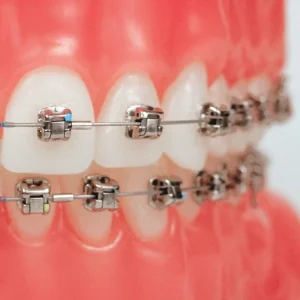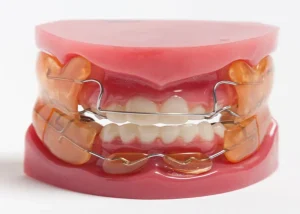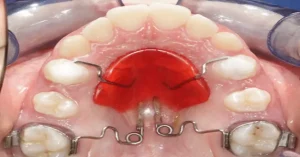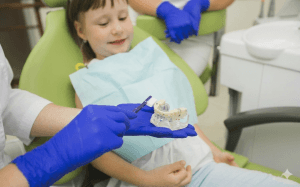

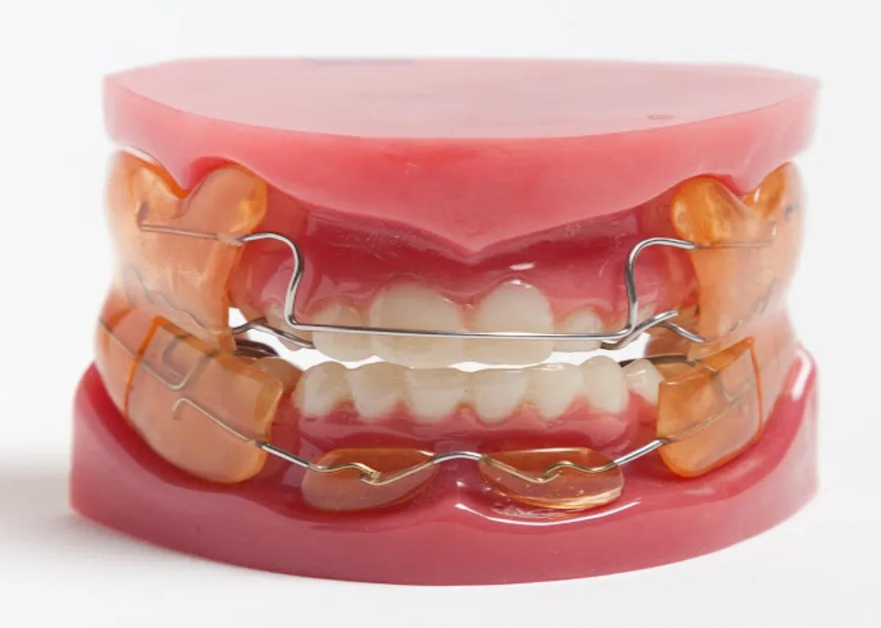
from AQR Orthodontics, Jumeirah, Dubai
Quick Answer
Functional appliances can help at almost any point during a child’s growth, but research suggests starting around the pubertal growth spurt produces the strongest skeletal (bone) changes, while earlier treatment tends to produce more dental changes. Neither is “”wrong”—the right timing depends on your child’s specific growth pattern and goals.
What Does “Early Intervention” Mean in Orthodontics?
Early intervention means starting functional appliance therapy during a child’s growth phase—typically during mixed dentition (when baby and permanent teeth coexist) or early adolescence, when bones and muscles respond best to guided treatment.
Why Timing Affects the Type of Change You Get
- Around puberty—research suggests the pubertal growth spurt tends to produce more skeletal change, particularly in the mandible, than earlier intervention.
- Before puberty—early intervention can still meaningfully reduce overjet and improve molar relationships, largely through dental and alveolar changes rather than skeletal ones.
What Happens If Treatment Starts Too Early or Too Late?
- Too early—still beneficial, but the biggest skeletal impact tends to happen at or around puberty; starting very early can sometimes stretch treatment out longer than necessary
- Too late—waiting past the growth window can make skeletal correction more difficult, potentially limiting results to braces alone or requiring more extensive treatment later
Why the Lower Jaw Keeps Growing Longer Than the Upper Jaw
Facial growth generally follows a top-down pattern—structures farther from the brain, like the jaw, grow for longer. In practical terms, the lower jaw (mandible) continues growing more, and for longer, than the upper jaw (maxilla), with jawline definition typically becoming clearer around puberty. Since the lower jaw has a longer growth window, timing functional appliances to this pattern — for example, starting when mandibular growth accelerates — can help guide skeletal change more efficiently.
A Note on Seasonal Timing
Beyond biological timing, many Dubai families find it practical to start treatment around the back-to-school period, when routines are settled and schedules are more predictable. That said, growth-window timing matters more than the calendar—many children start successfully at other times of year too.
Final Thoughts
The right timing for functional appliances depends on your child’s growth pattern, not just the calendar. Book a growth alignment assessment with Dr. AQR at AQR Orthodontics, Jumeirah, Dubai.
About the Author
Dr. AQR is a specialist orthodontist and founder of AQR Orthodontics, Jumeirah, Dubai.
FAQ’s
If I wait until puberty, am I too late?
Not necessarily—but starting at or just before puberty tends to offer the strongest chance for skeletal change.
Will early treatment guarantee we can skip braces later?
Not always. Early functional treatment is often Phase 1, with braces as a shorter, simpler Phase 2.
What if we can’t start during the back-to-school period—will we still benefit?
Yes—growth milestones are monitored continuously, and many children start treatment successfully at other times of the year.