
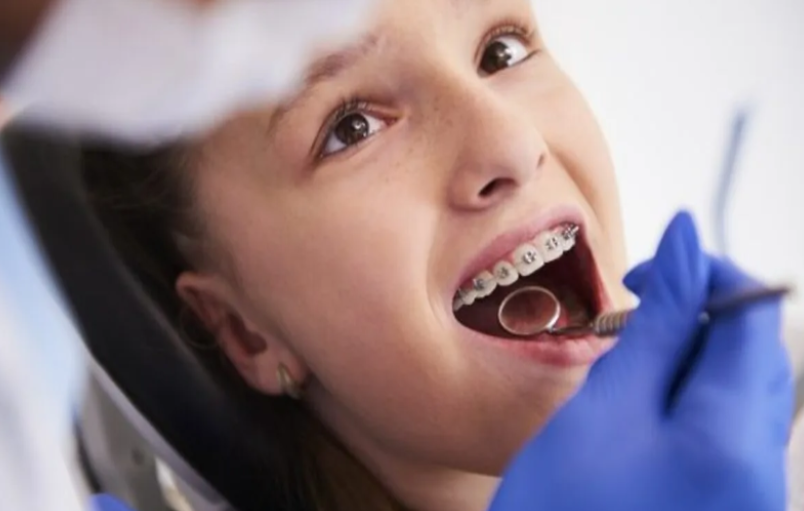
A specialist's guide from Dr. AQR, Jumeirah, Dubai
Quick Answer
Two-phase orthodontic treatment for kids has three parts: Phase 1 (ages 7–10) guides jaw growth and corrects early bite problems; a resting phase lets remaining permanent teeth erupt naturally; and Phase 2 (ages 11–14) uses full braces or aligners to finalize alignment. Not every child needs two phases—a specialist assessment determines what’s right for your child.
What Is Two-Phase Orthodontic Treatment?
Two-phase treatment is a strategic approach used only when early correction offers a clear benefit—it isn’t automatically prescribed for every child.
Phase 1: Early Intervention (Ages ~7–9)
Appliances used:
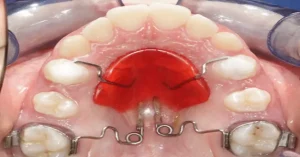
- Palatal expanders to widen a narrow upper jaw
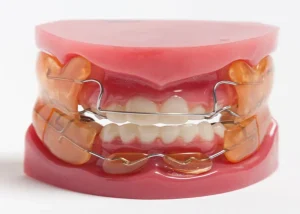
- Removable functional devices (e.g., Twin Block)
- Limited braces on just a few permanent teeth
- Habit control appliances for thumb-sucking or tongue-thrust
- Occasionally, headgear or facemasks to guide jaw growth
Primary goals:
- Correct crossbite or severe over/underbite early
- Create space for permanent teeth
- Promote balanced jaw growth
- Interrupt harmful habits affecting dental development
Duration: typically 8–16 months, depending on complexity.
The Resting (Observation) Phase
Active treatment pauses to allow remaining permanent teeth to erupt naturally. Retainers may be issued to preserve Phase 1 gains, with recall visits every 6–12 months to monitor growth.
Phase 2: Comprehensive Treatment (Ages ~11–14)
Appliances used:
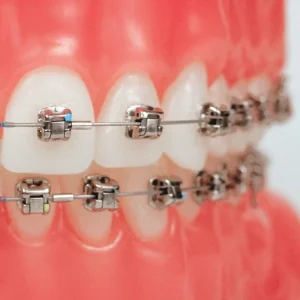
- Full upper and lower braces (metal or ceramic)
- In selected cases, clear aligners or elastics
Primary goals:
- Achieve final alignment of all permanent teeth
- Refine bite function and dental occlusion
- Enhance facial harmony and long-term stability
Duration: typically 12–24 months, depending on complexity and compliance. Retainers (Hawley, Essix, or bonded) are worn afterward to prevent relapse.
Is Two-Phase Treatment Always the Right Choice?
Not necessarily—and being upfront about this is part of good orthodontic care.
Ideal candidates for early Phase 1:
- Skeletal Class II or Class III malocclusions (underbites, overbites, severe crossbite)
- Narrow upper arches needing expansion
- Habit-induced issues (thumb-sucking, tongue thrust)
- Severe overjet, where early correction can meaningfully reduce trauma risk
Situations where single-phase treatment may suffice:
- Milder alignment issues or strong patient cooperation with favorable eruption patterns
- Some Class II cases better treated after the pubertal growth spurt for more efficient correction
Evidence on long-term outcomes is mixed: some reviews find no significant difference in final occlusion between one-phase and two-phase treatment, and note that two-phase treatment can sometimes mean more total appointments and cost without a clearly superior final result. This is exactly why a personalized growth assessment—not a one-size-fits-all recommendation—matters.
Why Choose AQR Orthodontics for Your Child’s Treatment
- Personalized diagnostic assessment, including growth forecasting and mixed-dentition analysis, before recommending Phase 1
- Reduced need for permanent tooth extraction when jaw growth is guided early
- Coordinated planning to keep Phase 2 shorter and simpler when Phase 1 is used
Final Thoughts
Two-phase treatment is a strategic, evidence-based method used only when early correction offers a clear benefit—not a default. Book a growth assessment with Dr. AQR at AQR Orthodontics, Jumeirah, Dubai.
About the Author
Dr. AQR is a specialist orthodontist and founder of AQR Orthodontics, Jumeirah, Dubai.
FAQs
Is early (Phase 1) treatment always better than waiting?
Not necessarily. Phase 1 offers specific benefits in certain cases (like Class II/III malocclusions or crossbites), but for milder cases, well-timed single-phase treatment can achieve similar long-term results.
Will two-phase treatment cost more overall?
It can involve more total time and appointments than single-phase treatment but may help avoid more invasive interventions later. This trade-off depends on your child’s specific case.
How long does each phase last?
Phase 1 typically spans 8–16 months; Phase 2 typically ranges from 12–24 months, depending on complexity and compliance.