

by Dr. AQR – MDS, M. Orth (RCSEd)
Quick Answer
Braces and aligners both require a more careful hygiene routine than usual: brush after every meal, floss at least once daily using threaders or interdental brushes, and use fluoride toothpaste to protect enamel. Aligner wearers should also remove trays before eating and clean them daily with a soft brush and mild soap.
Why Braces Change Your Hygiene Routine
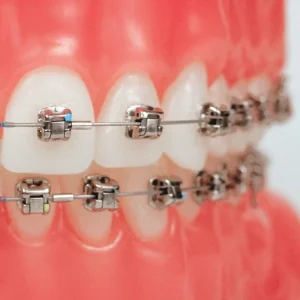
- More hiding places — wires, brackets, and bands create spots where food and plaque accumulate
- Hard-to-reach areas — thorough brushing can’t always reach the gumline or between teeth as easily
- Higher risk if neglected — untreated plaque can lead to gingivitis, white spot lesions, or cavities once braces come off
Essential Tools for Braces Hygiene
- Orthodontic or electric toothbrush — a “V-cut” or special brush head helps clean around brackets
- Interdental brushes (proxabrushes) — ideal for cleaning around wires and brackets where floss can’t reach
- Floss threaders or orthodontic floss — designed to maneuver floss under archwires
- Water flosser (oral irrigator) — helps remove debris and reduce gum inflammation around braces
- Fluoride toothpaste and mouthwash — strengthens enamel and fights bacteria in hard-to-reach spots
Your Daily Cleaning Routine
- Rinse with water first to loosen larger debris
- Brush in stages — above brackets with downward strokes, below with upward strokes, directly over brackets in circular motions
- Brush every surface for at least two minutes, including chewing surfaces and back molars
- Floss thoroughly under wires using threaders or floss aids, sliding gently beneath the gumline on each tooth
- Use interdental brushes at the gumline, moving back and forth to remove plaque, then rinse and replace when worn
- Water-floss after brushing and flossing to flush remaining particles
- Finish with mouthwash and, optionally, a tongue scraper
- Do a mirror check for remaining debris, loose brackets, or wire issues
Foods to Avoid — and Friendly Alternatives
- Avoid: sticky or chewy items (caramel, chewing gum), hard or crunchy foods (nuts, popcorn, ice, uncut apples), and sugary or acidic drinks
- Choose instead: soft fruits, cooked vegetables, yogurt, cheese, lean meats, soft bread, or smoothies
Caring for Clear Aligners
- Remove aligners for eating — only plain water while wearing them
- Brush and floss before reinserting trays to avoid trapping particles
- Clean aligners daily with a soft-bristled brush and mild, clear soap (not toothpaste), rinsing with cool or lukewarm water only
- Avoid staining foods and drinks while wearing aligners, rinsing your mouth and tray after any exception
- Stay hydrated to help flush debris and support oral health
Have questions about your specific hygiene routine? Ask Dr. AQR at your next visit
Pro Tips to Support Your Treatment
- Use fluoride regularly to help prevent decalcification
- Change your toothbrush or head every 3 months, or sooner if bristles fray
- Keep up annual professional cleanings, even during treatment
- Carry a travel toothbrush and toothpaste for cleaning after snacks on the go
- Avoid brushing immediately after acidic meals — brush before, or wait about 30 minutes
Final Thoughts
A consistent hygiene routine protects the results you’re working toward throughout treatment. Contact AQR Orthodontics, Jumeirah, Dubai, for personalized hygiene guidance from Dr. AQR.
About the Author
Dr. AQR is a board-certified, specialist orthodontist practicing in Dubai, UAE. He has 8+ years of clinical experience and his key areas of focus are functional/myofunctional and airway-focused orthodontics, among others. Click here to know more about him.
FAQ’s
How often should I brush with braces?
Ideally after every meal, along with flossing at least once daily using threaders or interdental brushes.
Can I use regular toothpaste to clean my aligners?
No — toothpaste can be abrasive and cause micro-scratches; use a soft brush with mild, clear soap instead and rinse with cool or lukewarm water.
What happens if I don’t keep up with hygiene during treatment?
Neglected plaque during treatment can lead to white spot lesions, gum inflammation, or cavities that become visible once braces are removed.