
from Dr. AQR Jumeirah, Dubai.
Quick Answer
Self-ligating braces use a built-in clip instead of elastic ties to hold the archwire in place, reducing friction and often allowing smoother tooth movement, fewer adjustment visits, and easier cleaning compared to traditional braces. The most widely used system is Damon braces.
What Are Self-Ligating Braces?
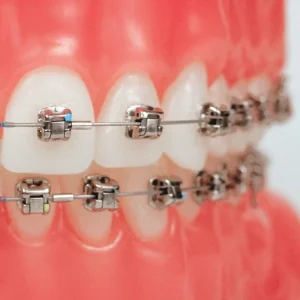
Self-ligating braces work like traditional braces but without elastic bands or metal ties to hold the archwire. Instead, a built-in sliding mechanism or clip secures the wire, allowing it to move more freely and reducing friction.
How Do They Work?
In any orthodontic treatment, teeth are guided into position using gentle, consistent pressure from an archwire connected to brackets. Traditional braces hold this wire with elastic ties, which increase friction. Self-ligating brackets eliminate these ties, letting the wire glide more naturally within the bracket.
Traditional Braces vs. Self-Ligating Braces
- Wire-holding method: elastic bands/metal ties (traditional) vs. built-in clips (self-ligating)
- Friction level: higher (traditional) vs. reduced (self-ligating)
- Comfort: can cause tightness or soreness (traditional) vs. smoother, gentler movement (self-ligating)
- Appointments needed: frequent adjustments (traditional) vs. often fewer visits (self-ligating)
- Cleaning: elastic bands can trap food (traditional) vs. easier to clean around brackets (self-ligating)
- Treatment time: typically longer (traditional) vs. often shorter for many cases (self-ligating)
Key Benefits of Self-Ligating Braces
- Shorter treatment times for many patients, due to reduced friction enabling more efficient tooth movement
- Increased comfort, with less pressure needed to move teeth
- Fewer appointments, since constant, gentler force requires fewer in-clinic adjustments
- Easier oral hygiene, without elastic ligatures trapping food and plaque
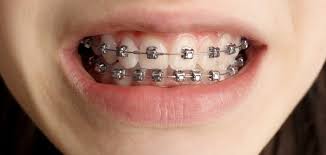
- Discreet aesthetic options, available in both metal and clear ceramic
Curious if self-ligating braces suit your case? Book a consultation.
Are Self-Ligating Braces Right for You?
Self-ligating braces suit most cases, from mild to complex misalignments, and are especially beneficial for patients wanting a faster experience, greater comfort, easier hygiene, or a more discreet option. The most widely recognized self-ligating system is Damon braces—read more about what makes Damon specifically different.
Final Thoughts
Self-ligating braces represent a genuine technological improvement in comfort and efficiency for many patients. Book a consultation with Dr. AQR at AQR Orthodontics, Jumeirah, Dubai, to see if they’re right for you.
About the Author
Dr. AQR is a specialist orthodontist and founder of AQR Orthodontics, Jumeirah, Dubai.
FAQs
Are self-ligating braces more expensive than traditional braces?
The upfront cost can be slightly higher, but potential savings in fewer visits and shorter treatment time can offset this for some patients.
Do self-ligating braces work faster for everyone?
Many patients see shorter treatment times, but results depend on case complexity—a specialist assessment determines what to expect for your specific case.
Is Damon the only self-ligating braces system?
No—Damon is the most widely used and recognized self-ligating system, but it’s one of several available options.