
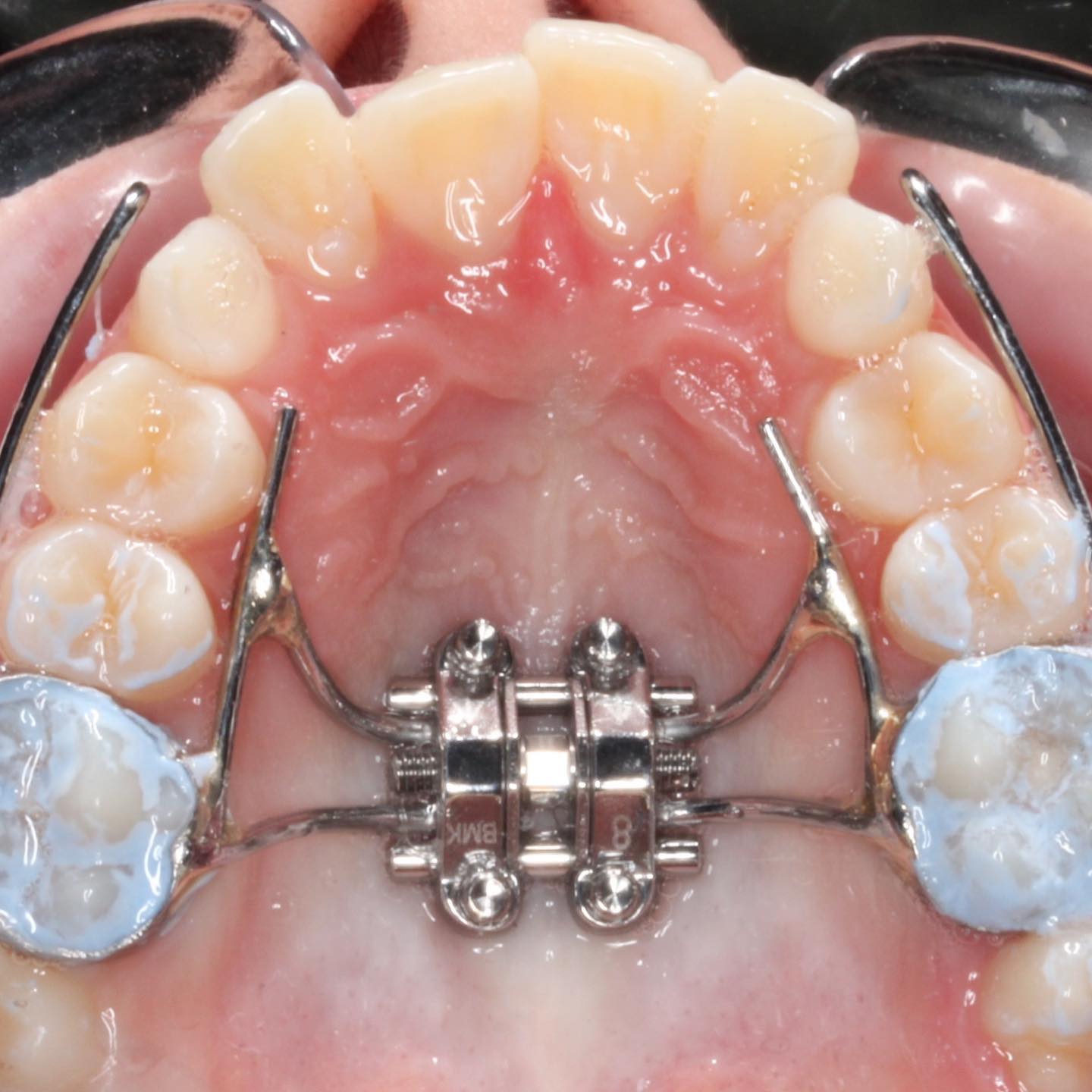
from AQR Orthodontics, Jumeirah, Dubai
Quick Answer
A palatal expander is a custom-fitted appliance that gently widens the upper jaw using a central screw, most effective in children ages 6–13 while the palate’s midline suture is still flexible. It’s commonly used for crossbite, crowding, and airway concerns, with adult options like MARPE or SARPE available once the suture has fused.
What Is a Palatal Expander?
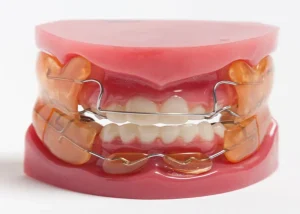
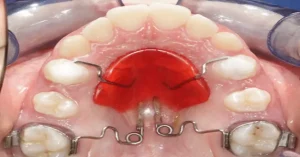
A palatal expander is custom-fitted over the upper molars with a central screw. As the screw is gradually turned, it exerts gentle outward pressure, slowly widening the two halves of the upper jaw.
Ideal Age for Treatment
- Children (6–13 years)—the palatal bones aren’t yet fused, allowing the expander to guide skeletal expansion
- Teens (13–16 years)—suture fusion begins, so expansion becomes a mix of skeletal and dental change; still effective with careful evaluation
- Adults (18+)—traditional expanders alone may not separate fused sutures; MARPE (mini-implant-assisted) or SARPE (surgically assisted) can achieve skeletal expansion after fusion
How Expanders Work
- Targeting the suture—gentle outward force applied directly to the flexible mid-palatal suture
- Gradual expansion—each turn of the screw (typically ¼ mm per day) separates the suture gradually, allowing new bone to form in the gap
- Stabilization—the expander stays in place 3–6 months afterward so new bone can consolidate
- Adult adaptations—MARPE uses mini-screws anchored into bone; SARPE combines surgery with expansion for fused sutures
When Is an Expander Needed?
- Posterior crossbite—upper back teeth biting inside lower teeth
- Crowding—narrow arches struggling to accommodate permanent teeth
- Impacted teeth—widening creates space for blocked teeth to erupt
- Airway concerns—a narrow palate can restrict nasal airflow
- Smile aesthetics—a wider arch supports a fuller smile and more balanced facial width
Slow vs. Rapid Expansion
- Slow Maxillary Expansion (SME)—gradual activation (~1 mm/week), generally more comfortable, best for mild-to-moderate constriction in younger children
- Rapid Maxillary Expansion (RME)—faster activation (~0.5–1 mm daily), efficient for crossbites and severe cases, with more initial discomfort and possible temporary speech changes or a visible gap between front teeth
Adults & Late Teens: MARPE and Surgical Options
- MARPE—mini-screws anchored in bone apply expansion force directly to the maxilla, without surgery, in late teens and some adults
- SARPE—surgically assisted expansion for adults with fused sutures, severe constriction, or failed MARPE; predictable and long-term, though it involves surgery and recovery
Airway Benefits
- Widened nasal passages, potentially improving airflow and reducing nasal resistance
- Improved tongue posture, supporting nasal breathing and decreasing chronic mouth-breathing habits
Some research indicates MARPE in adults may meaningfully increase nasal and nasopharyngeal volume, though exact figures vary by study—ask Dr. AQR about the most current evidence for your case.
Why Choose AQR Orthodontics
- Airway-centered, technology-driven expansion assessment
- Digital scans, 3D imaging, and custom CAD/CAM appliances
- Full-spectrum care from gentle SME in kids to MARPE/SARPE for adults
Final Thoughts
Palatal expanders are a powerful, evidence-based tool for jaw constriction, whether treated early in childhood or with modern adult alternatives.
About the Author
Dr. AQR is a specialist orthodontist and founder of AQR Orthodontics, Jumeirah, Dubai.
FAQs
Is expander treatment painful?
Slow expansion is generally more comfortable; rapid expansion can cause more initial discomfort, though both are typically well-tolerated with guidance from your orthodontist.
Can adults still get a palatal expander?
Traditional expanders are less effective once the suture has fused, but MARPE or SARPE can achieve skeletal expansion in older teens and adults.
Does an expander help with mouth breathing or snoring?
A wider palate can support better nasal breathing and tongue posture, which may help some patients, though results vary by individual case.