
From AQR Orthodontics, Jumeirah, Dubai
Quick Answer
AI helps analyze 3D scans, X-rays, and facial photos to improve diagnostic precision, simulate treatment outcomes in advance, and design better-fitting appliances—but it works alongside Dr. AQR’s clinical judgment, not in place of it. Complex cases, ethical decisions, and patient communication remain firmly human-led.
What Is AI in Orthodontics?
AI in orthodontics refers to systems—neural networks and deep learning models—capable of analyzing large datasets like 3D intraoral scans, X-rays, and facial photos, learning from past outcomes to assist diagnosis and planning.
How AI Assists Treatment Planning
Enhanced Diagnosis and Analysis
- Automated landmark detection identifies key dental landmarks in 3D scans with high precision, reducing manual error
- Precise measurement and growth prediction, including forecasting craniofacial growth in teens to help optimize timing
Predictive Modeling and Simulation
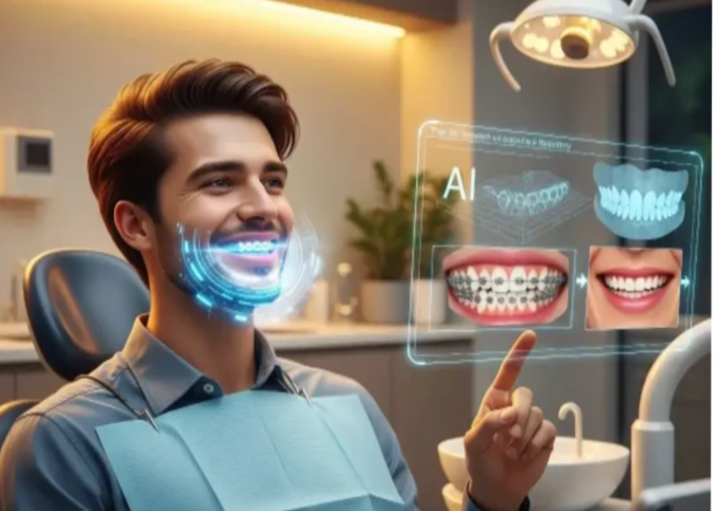
- Virtual treatment simulation lets you preview your projected final smile before treatment starts
- Optimized movement sequencing can identify efficient paths to your treatment goals
- Data-informed extraction-vs-expansion decisions, supporting rather than replacing clinical judgment
Personalized Appliance Design
- AI-assisted aligner and bracket design supports more precise force application and predictable movement
Remote Monitoring
- AI-enabled remote apps can detect deviations from your plan using uploaded photos, supporting virtual check-ins and fewer in-office visits
What the Benefits Mean for You
- More predictable final results, since you can visualize your smile in advance
- Potentially shorter treatment through optimized movement sequencing
- Enhanced comfort from appliances custom-designed for your mouth
- Fewer in-clinic visits through remote AI-assisted tracking
- Data-informed decisions on questions like extraction versus expansion
[Mid-article CTA: “Curious how AI-assisted planning could work for your case? Book a consultation.”]
AI Is a Tool—Never a Replacement
At AQR Orthodontics, AI is treated as a powerful aid, not a substitute for clinical expertise and compassionate care.
- Complex cases—unique anatomical variations, prior treatments, or aesthetic considerations—require human clinical insight that algorithms alone can’t replicate
- AI’s predictive accuracy depends on well-curated training data; without correction, it may generalize poorly across different ethnicities, ages, or facial types
- Informed consent, empathy, and explaining the reasoning behind a treatment plan remain fundamentally human responsibilities
- Dr. AQR reviews every AI-generated simulation, adjusting for comfort, aesthetics, and long-term stability before it becomes part of your plan
Final Thoughts
AI enhances precision and predictability in orthodontic planning—but it’s Dr. AQR’s clinical expertise that turns that data into the right plan for you. Book a consultation with Dr. AQR at AQR Orthodontics, Jumeirah, Dubai.
About the Author
Dr. AQR is a specialist orthodontist and founder of AQR Orthodontics, Jumeirah, Dubai.
FAQs
Does AI replace the orthodontist in planning my treatment?
No—AI supports diagnosis and planning, but Dr. AQR reviews and adjusts every AI-generated recommendation based on clinical judgment specific to your case.
Is AI-assisted treatment more expensive?
Not necessarily—AI tools are generally part of the standard digital workflow rather than a separate premium service; ask Dr. AQR’s team for specifics.
Can I see a simulation of my results before starting treatment?
Yes—AI-assisted simulation is one of the more accessible benefits, letting you preview a projected outcome before committing to a plan.